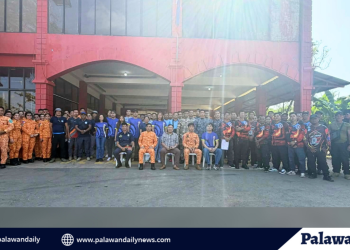


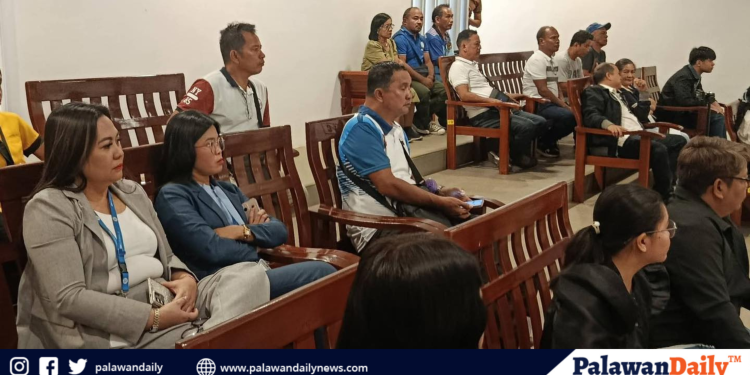

The city government of Puerto Princesa presented the proposed Public Transport Modernization Program and the Land Public Transport Route Plan (LPTRP) 2026-2030 to the city and barangay officials, transport sector representatives, and stakeholders in a public consultation held recently.
The activity was held at the Sangguniang Panlungsod session hall.
City Planning and Development Department Head, Engr. Jovenee C. Sagun presented the proposed plan and explained that it integrates route networks, vehicle types, and unit allocation per route, consistent with the national guidelines under the national government’s Public Transport Modernization Program.
In his post, Vice Mayor Peter Q. Maristela shared some of the matters discussed during the public consultation. He said that included in the plans are routes within the city proper, as well as routes in the barangays, which if approved by the Department of Transportation (DOTr), the City Council will enact an ordinance for its implementation.
“Para sa urban route, kabilang sa mga itinalagang ruta ang Irawan, Sicsican, PSU-City Hall, Santa Lourdes, Tagburos, Alta Homes, San Jose at New Market na daraan sa Rizal Avenue o Malvar St. at iikot sa bahagi ng Concepcion St. sa may cathedral. Samantala, sa rural route ay magkakaroon ng ruta patungong Langogan, Sabang sa Brgy. Cabayugan at sa Napsan sa west coast, at sariling ruta mula Bacungan papuntang Talaudyong na isang tourist destination. Ang naturang route plan, sakaling aprubahan ng DOTr ay pag-uusapan muli sa City Council para sa kaukulang ordinansa,” the vice mayor explained.
A LPTRP is a detailed, evidence-based document prepared by the LGUs that outlines the designated, authorized routes, modes of transport and number of units needed for public transport.
The LPTRP as mandated by a joint circular of the Department of Interior and Local Government (DILG) and the DOTr, is essential for local government units (LGUs) to modernize transport systems, minimize congestion, and ensure evidence-based, demand-driven route, vehicle, and franchise planning. It also integrates local development goals providing safer, more efficient mobility for commuters.