


The city government of Puerto Princesa is studying the proposal of a Korean company on the possibility of converting the city’s plastic solid wastes into bunker oil and aviation fuel, in an effort to reuse residual plastic wastes instead of dumping these to landfill.
Mayor Lucilo R. Bayron announced this morning, February 16, 2026 during the flag raising ceremony at the New City Hall that a Korean firm has presented that proposed project in a presentation with him, together with the department heads of the City Planning and Development, City Engineering and City Environment and Natural Resources.
“Nagkaroon tayo ng presentation nandun ang ating city, planning, city engineer, city ENRO, yung presentation ng Korean group ng waste-to-oil kasi mga plastic daw, mga wrapper, mga Styrofoam pwede daw ma convert into oil na mas mataas na quality kaysa sa nabibili na regular na bunker oil at aviation fuel,” Mayor Bayron said.
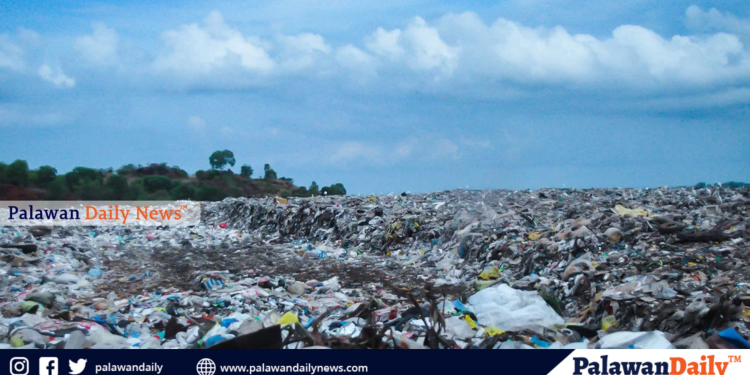
Based on updated figures from the City Solid Waste Management Program of Puerto Princesa, the city has close to 200 tons of solid wastes daily, collected by garbage compactors and other collection vehicles.
Several local governments and local initiatives in the country are adopting plastic-to-fuel technologies, primarily through pyrolysis, to convert plastic waste into oil. One of which is Laoag City in Ilocos region that operate a Department of Science and Technology (DOST) supported pyrolysis facility to manage landfill waste since last year.
Based on sources, one inventor, Jayme Navarro developed a method to convert 5,000 kg of plastic waste into 400 liters of diesel/gasoline using pyrolysis. The process involves melting plastics (polyethylene, polypropylene, polystyrene) to break them down into fuel components.
Holcim, a cement company in the country, also converts non-recyclable residual plastics into alternative fuels and raw materials for cement production, rather than converting them into oil. This is through their waste management unit Geocycle.
Instead of producing oil, Holcim uses the high-temperature kilns in their cement plants to burn processed waste materials (plastics, rubber, wood) as a replacement for coal. Holcim’s Geocycle partners with local government units and private companies to collect non-recyclable plastic, reducing the amount that ends up in landfills.
Converting plastic wastes to oil offers a solution to two major challenges: waste management and energy demand. Today, plastic wastes are residual wastes that continue to pollute our landfills. This waste-to-oil technology has been considered as a prospect that will provide environmental and economic benefits.