

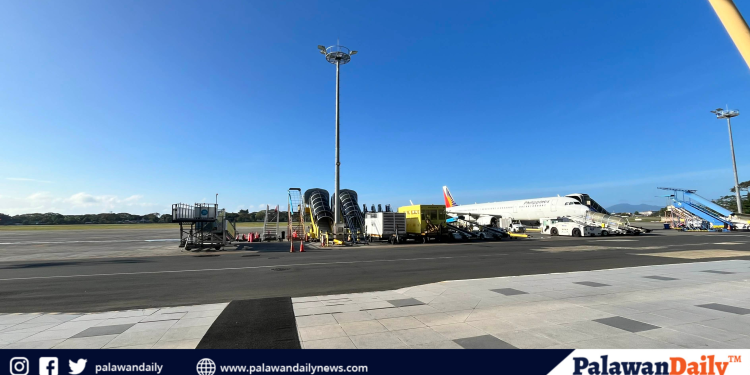

A Saturday evening flight from Palawan to the capital ended almost as soon as it began, as a landing gear malfunction forced a PAL Express Airbus 320 to hit the brakes on its ascent and return to the tarmac.
The aircraft, Flight 2P2788, was barely airborne from Runway 09/27 when the crew signaled a technical issue, prompting an immediate turnaround. By 7:12 p.m., the plane was back on the ground at Puerto Princesa International Airport (PPIA), taxiing into a night of mechanical inspections rather than the Manila skyline.
For the 61 passengers and one infant on board, Valentine’s Day was spent under the harsh terminal lights. Maintenance crews from the Civil Aviation Authority of the Philippines (CAAP) took over the aircraft, running a series of troubleshooting tests on the landing gear systems.
While some travelers opted to wash their hands of the delay and book alternative flights, the majority stayed behind, fueled by airline-provided meals and a long wait for a safety clearance.
This isn’t the first time the runway here has seen such tension. Just last September, the airport was paralyzed when a military plane became disabled on the strip, halting commercial traffic for hours. Saturday’s incident, though less disruptive to the overall schedule, served as a fresh reminder of the thin margin for error in island aviation.
The “all-clear” didn’t come until after midnight. Once technicians were satisfied that the gear would retract and lock as intended, the aircraft was cleared for a second attempt. It finally lifted off at 12:19 a.m. Sunday, touching down at Ninoy Aquino International Airport at 1:15 a.m., over five hours behind schedule but without further incident.
CAAP officials maintained that the return was a textbook application of safety protocols. In a statement, the agency prioritized the “well-being of the riding public,” framing the long delay as a necessary trade-off for a safe arrival.