


The coastal area of Barangay Luzviminda in Puerto Princesa City serves as a local pantry for a number of families.
For Emma Amit, a local content creator, the waters of Sitio Tacduan were a familiar source of inspiration. But on a Tuesday in early February, that same sea yielded a harvest that was as beautiful as it was catastrophic.
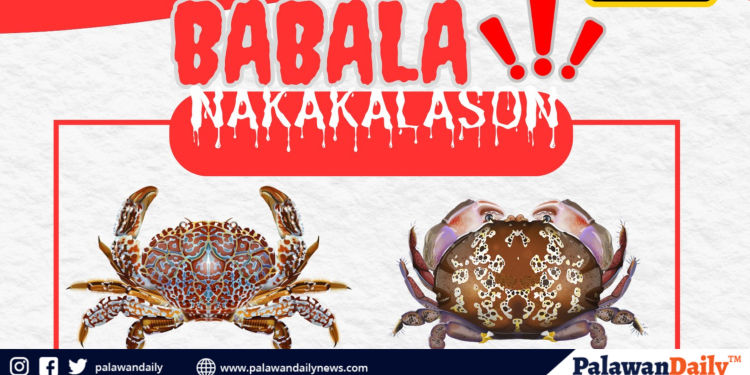
Amit succumbed to respiratory failure on February 6. The cause was not a sudden tide or a deep water accident, but a dinner plate featuring Zosimus aeneus, the Devil Crab.
The incident began on February 4 with what appeared to be a routine trip. In the shallows of Tacduan, the Amit family gathered a variety of crustaceans.
That evening, Emma did what she normally did. She turned the camera on. She vlogged the preparation, the cleaning, and the cooking of the catch, unaware that among the edible species was a “kuret,” a mosaic patterned crab whose shell and flesh harbor a cocktail of neurotoxins potent enough to make a cobra flinch.
The following morning, the remnants of the catch were served for breakfast. When a friend from a neighboring village stopped by, Emma offered her a seat at the table.
The friend’s survival was a matter of inches and appetite. After consuming just one crab, she felt a terrifying electric numbness creep across her lips and tongue. She began to salivate uncontrollably, an autonomic response to the ingestion of saxitoxin.
She stopped eating immediately and sought medical help. She survived.
Emma, however, who had consumed more of the meal, was not as fortunate. She lost consciousness shortly after and never regained it.
The tragedy is a stark reminder of a persistent and deadly misunderstanding of food safety in the region.
The toxins found in the Devil Crab, primarily saxitoxin and tetrodotoxin, are heat stable.
They are indifferent to the boiling point of water or the searing heat of a frying pan.
“People believe that cooking kills everything,” said Punong Barangay Laddy Gemang, who confirmed this was the third such fatality in the area’s recent history. “But with the Devil Crab, heat does nothing. The poison remains as potent as it was in the ocean.”
Investigators later recovered seven distinct shells of Zosimus aeneus from the family’s waste, a silent testament to the scale of exposure.
For the Bureau of Fisheries and Aquatic Resources, or BFAR, the battle is one of education against tradition. Known locally by a litany of names such as kuret, liod, and kaligmata, the crab is a master of disguise, often blending in with its non toxic cousins. Its distinctive warty protrusions and colorful mosaic like shell are markers of a creature that has no need to hide from predators. It is its own weapon.
This tragedy reminds us that the sea is not a store where everything is safe to touch. It is a powerful, ancient neighbor that demands respect and a discerning eye.