

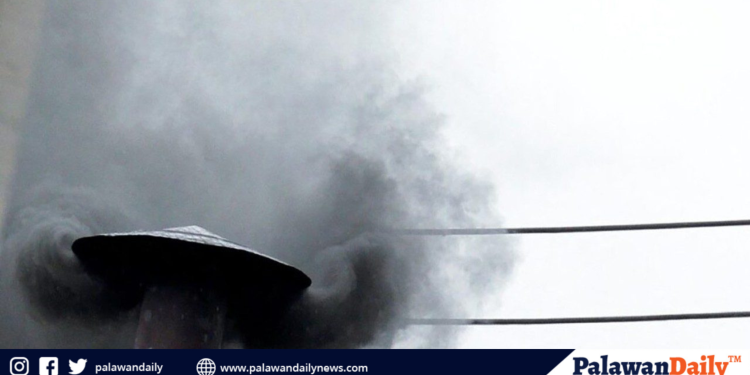

A plume of black smoke curled into the early evening sky above the Sistine Chapel on Wednesday, signaling that the 133 cardinal-electors gathered inside the Vatican had failed to choose a new pope on their first ballot. The centuries-old ritual, rich in secrecy and symbolism, opened a new chapter in the history of the Catholic Church as it faces internal fractures and the challenge of a fast-changing world.
Inside the chapel, the cardinals began the delicate process of electing a successor to the late Pope Francis, who died last month. As expected, no consensus was reached on the first day of voting, historically more of a formality than a decider. The process will now continue with up to four votes per day until one candidate secures the necessary two-thirds majority.
But thousands of miles away from the ritual pageantry of Rome, in the island province of Palawan in the Philippines, the suspense felt intensely personal.
“We watched the livestream with our hearts beating fast,” said Sister Marilyn, a nun from Puerto Princesa. “For us here, it’s more than smoke. It’s hope.”
The anticipation surrounds Cardinal Luis Antonio Tagle, a theologian and former archbishop of Manila, who is among the frontrunners in the ongoing conclave. His name has surfaced alongside Italian Cardinal Pietro Parolin, Hungarian Cardinal Péter Erdő, and several others. Tagle, 67, was the third to cast his vote on Wednesday afternoon, following the order of precedence among cardinal-electors.
In Palawan, where Catholicism remains deeply woven into daily life, prayers have intensified.
“We have been praying that Cardinal Tagle will be chosen,” said Edward Benitez, a public school teacher in Narra. “He’s humble, he listens, and he has the heart of a Filipino.”
Tagle’s national profile, often likened to Pope Francis for his emphasis on compassion and inclusion, has resonated not only in the Philippines but also across regions where the Church is growing. Dubbed by some as the “Asian Francis,” Tagle has served as pro-prefect of the Vatican’s Dicastery for Evangelization, continuing a leadership trajectory shaped by pastoral care and theological clarity.
Still, his candidacy has not been without controversy. Days before the conclave, Italian media outlets linked Tagle to unverified allegations involving gambling operations. The accusations, which remain unsubstantiated, were quickly addressed by Church officials.
“Let God take care of them,” said Cardinal Pablo Virgilio David, president of the Catholic Bishops’ Conference of the Philippines (CBCP), when asked about the accusations. “He [Tagle] has consistently advocated for a humble and responsive Church that listens to the cries of the wounded and acts decisively to protect the vulnerable,” added CBCP Secretary General Msgr. Bernardo Pantin in a May 3 statement.
Cardinal David and Manila’s Archbishop Jose Advincula are also part of the conclave, representing a historic moment for the Philippine Church, with three cardinal-electors participating for the first time.
The conclave, which began after a Mass in St. Peter’s Basilica and a solemn oath of secrecy, is expected to last several days. The average length of the past ten conclaves has been just over three days, with the 2013 election of Francis taking only two.
Inside the Vatican, technology has been muted and all outside communication severed, as Church tradition demands complete isolation. Votes are cast in silence, beneath Michelangelo’s fresco of The Last Judgment, and burned after each round—black smoke for no decision, white for a new pope.
At a morning Mass before the conclave began, Italian Cardinal Giovanni Battista Re—who, at 91, no longer votes—urged the electors to “set aside every personal consideration” and focus “only on the good of the Church and of humanity.”
With Tagle’s name on the lips of both insiders and ordinary faithful, expectations in Palawan and across the Philippines are rising. But for now, all eyes remain on the chimney above the Sistine Chapel, waiting for the moment white smoke signals the rise of a new spiritual leader—for the Church, and for a watching world.