



Palawan State University (PalSU) officially launched the country’s first Drilling Fluid Research and Innovation (DFRI) Laboratory on Wednesday, March 25, marking a significant pivot toward domestic energy self-reliance as global oil markets face continued instability.
The facility, established through a P4,999,552.00 grant from the Department of Science and Technology (DOST-PCIEERD), is designed to develop local alternatives to imported drilling materials, a move officials say is critical given the current supply chain disruptions caused by conflicts in the Middle East.
Despite Palawan’s role as the host of the Malampaya gas field, the Philippines has historically lacked the infrastructure to produce its own drilling fluids, the specialized “mud” used to stabilize oil and gas wells during extraction.
The lab is also the first specialized petroleum research hub in the Philippines, intended to serve as the primary R&D arm for the university’s Petroleum Engineering program, the only one of its kind in the nation.
The laboratory’s immediate focus is the development of “smart” additives using Nanoiron Oxide and Nanosilica.
In offshore drilling, fluids must withstand extreme heat and pressure. Traditional fluids often fail under these conditions, increasing the risk of mechanical breakdown or environmental leaks. By utilizing nanotechnology, PalSU researchers have created fluids that remain stable in deep-well environments, potentially reducing the cost of exploration and increasing rig safety.
The project also emphasizes a “circular economy,” with researchers exploring ways to synthesize these high-tech additives from local industrial waste.
Beyond research, the lab is expected to benefit local nickel mining firms and drilling service providers. A project team is scheduled to visit the Rio Tuba Nickel Mining site tomorrow for field benchmarking to test the laboratory’s innovations in a real-world environment.
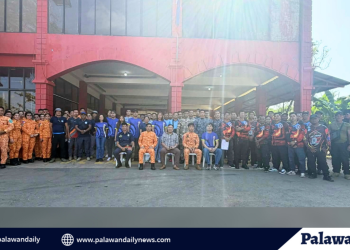
The inauguration was attended by university officials, representatives from the DOST, the press, and stakeholders from the local energy sector.