


My parents used to say I was born with a story to tell. Not in the way all children do, but in the way that makes you pause mid-conversation and realize the room has shifted. I was the kind of child who believed dragons existed, and one afternoon, I told them, my parents, that I was adopted and came from a faraway land where such creatures still flew.
They laughed, of course. But I remember the moment vividly, because in my mind, the world always had more corners than maps allowed. Maybe that’s why I became a journalist.
This work, the good, the quiet, the heavy-laden work, has taken me across Palawan. I’ve reported from towns with names so familiar now, they feel like childhood friends.
But the South holds something different for me.
It’s not just that I’m from Narra, where the rice fields stretch like soft carpets toward the horizon. It’s not that I lived in Balabac, or that I walked barefoot in Mangsee, where the sea draws a faint line toward Malaysia, as if geography itself is whispering: this is how close we are.
It’s that down South, people remind you who you are before the applause.
I’ve stayed in Rizal, in Brooke’s Point, in Bataraza before Buliluyan port was built, before speedboats were used. I remember boarding boats that moved like they were praying not to break apart in Amihan’s winds. I’ve watched Molbog fishermen build their “lantsa” from wood that smells of both labor and faith. I’ve tasted Bataraza pineapples, golden and quietly perfect.
I’ve been there when typhoons ripped through. When crocodiles surfaced. I’ve held the mic in one hand and relief goods in the other. I’ve reported, and I’ve mourned.
I’ve also learned “Babu,” “Apa,” and even “Astaga” in Balabac. I learned that language doesn’t need fluency to teach you something. I heard care in their tone. Laughter. Roots.
And once, I stayed in Pag-asa Island, the most remote barangay in Kalayaan, and sat with an old fisherman as he described how Chinese fishing vessels had taken over the very waters his father once cast nets in. I remember how his eyes welled up, not with anger, but with resignation. “Wala na kaming huli,” he said quietly. I held back my own tears. I didn’t just feel like a journalist then. I felt like a witness. A listener in a place God brought me to, so I could tell a story most people might never hear.
As journalists, we often get praised. People tell me I write well. That my columns speak to them.
That I carry other people’s stories with the right amount of weight. I’ve been invited to conferences, to tables I never dreamed of sitting at when I first started. And I’m grateful. But now, in my seventh year in this field, I’ve started to look past all that. Not because I’m ungrateful, but because applause fades.
Impact doesn’t.
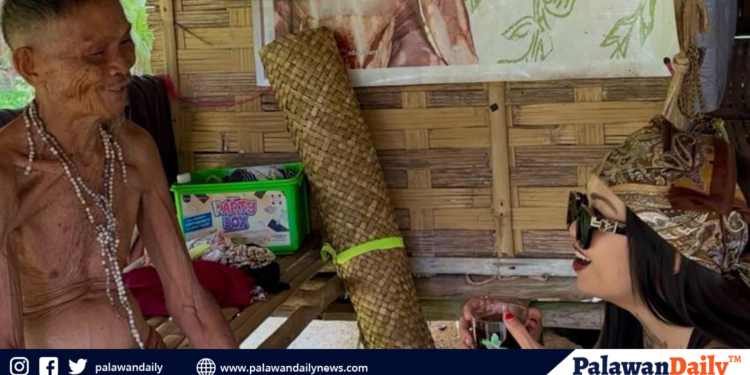
There’s something about the South that reminds you of that. I’ve met high ranked politicians, diplomats, generals, entrepreneurs, and tourists. But it’s the farmers in Narra, the boatmen in Balabac, the indigenous elders in Rizal who make me pause.
They live in stories that don’t trend. And yet, they matter. Deeply.
Sometimes I think of the North, of El Nido’s limestone cliffs and Coron’s glass-clear lagoons.
They are undeniably beautiful. But the South doesn’t compete. It doesn’t need to. Its beauty is in its people, in its pulse. It doesn’t perform for attention; it teaches you how to listen. And I’ve always listened.
This profession, this calling, taught me how to sit with silence, how to watch first before writing. It brought me to places I once only saw in textbooks, or flickering on an old TV in our home. It gave me front-row seats to the everyday lives of people who don’t ask to be seen but deserve to be.
I still consider myself a learner. A curious one. Maybe even the same child who once imagined dragons. And maybe, the best stories come from that place, not from mastery, but from awe.
When I retire someday, or when I leave this Earth, I don’t want to be remembered for bylines. I want to be remembered for choosing stories that mattered. For amplifying voices that weren’t always loud. For grounding truth where it lives, among coconut trees in Brooke’s Point, along the mine roads in Bataraza, in the lantern-lit shores of Mangsee, and the breathtaking 7PM late sunset in Pag-asa Island.
If you’re an aspiring journalist reading this, remember: your words can travel farther than you ever will. Use them wisely. Use them to build, not just your name, but a map that leads others home.
The South will always be home for me. Not because I came from it, but because it continues to make me who I am.
And in the end, that is what the best stories do. They don’t just change the reader. They change the storyteller.