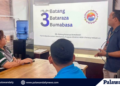


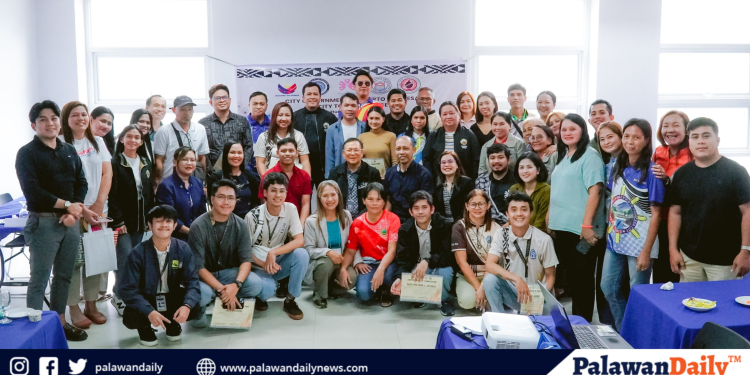

The City Tourism Office of Puerto Princesa spearheaded a five-day Cultural Mapping Workshop to participants from the city’s rural barangays and representatives from the municipalities of Aborlan, Quezon, Rizal, Taytay, and San Vicente coinciding the celebration of National Arts Months every February, highlighting Filipino heritage, cultural identity and creativity.
“The workshop was designed to equip participants with knowledge and skills in cultural mapping and the identification of cultural properties, an important step in strengthening local capacity for heritage documentation, protection, and preservation,” the City Tourism Office said.
Cultural mapping is defined as the process of documenting, recording, and visualizing a community’s tangible (landmarks, buildings) and intangible (stories, traditions, skills) cultural assets. It identifies, analyzes, and synthesizes local resources to create a comprehensive picture of a place’s unique cultural identity and heritage, among others.
Cultural mapping is important in heritage preservation, community development and planning, economic opportunities, empowerment and identity, among others.
“Guided by scholars of the National Commission for Culture and the Arts (NCCA), participants took part in sessions and hands-on activities covering heritage categories: intangible heritage, tangible movable heritage, tangible immovable heritage, and natural heritage. The five-day program also featured orientation on NCCA heritage forms, consultation sessions, workshop outputs, and field work activities,” the City Tourism Office further said.
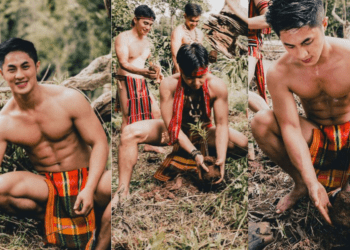
Palawan’s rich culture and heritage are deeply rooted in its diverse indigenous groups, including the Tagbanua, Palaw’an, Batak, and Tao’t Bato, and the maritime-oriented Cuyunon.
The City Tourism Office explained that activities like cultural mapping help build stronger communities through heritage awareness and cultural preservation in Puerto Princesa and Palawan.
Cultural mapping likewise enables communities to understand their past and present to better manage their future.
Culture is critically important for the present generation in Puerto Princesa and Palawan as it serves as the groundwork for sustainable development, ecological stewardship, and identity preservation along with the community’s tourism growth. As the country’s “last ecological frontier,” Palawan relies on indigenous traditions—to guide the balance between environmental protection and economic progress.