

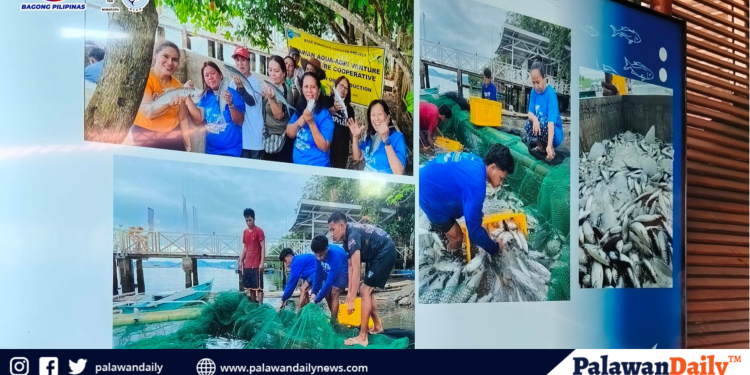

The Bureau of Fisheries and Aquatic Resources (BFAR) regional office announced that it initiated hands on technical training to bangus fish cage operators in Sandiwa, Barangay Tiniguiban, Puerto Princesa recently.
It said that the activity is part of the agency’s efforts to improve fisheries productivity while curbing environmental impact. The activity was organized following a request from the Palawan Aqua-Agri Venture Agriculture Cooperative (PAAVACO), whose members operate fish cages in Sandiwa, within Puerto Princesa Bay.
The training was administered by the BFAR’s Inland Sea Ranching Station (ISRS) and National Bangus Development Program (NBDP).
The session gathered fish cage operators, caretakers, and workers engaged in bangus production. The initiative forms part of BFAR’s ongoing push to strengthen community-level aquaculture through targeted training and support.
The BFAR further said that the training was led by NBDP regional focal person and ISRS officer-in-charge chief Billie P. Subang Jr., who delivered a lecture on best management practices for the grow-out culture of bangus (milkfish) in marine cages.
“Participants were guided through key aspects of culture management, including proper handling and stocking of fingerlings, feed selection, feeding strategies, and routine cage maintenance. The session also highlighted the need to adopt environmentally sustainable aquaculture practices amid increasing pressure on coastal ecosystems,” the BFAR Mimaropa said in a statement.
It further explained that a central focus of the training was feed management — one of the largest cost drivers in aquaculture. BFAR emphasized the importance of calculating appropriate stocking density and daily feed ration to avoid overstocking and overfeeding, practices that can drive up expenses and reduce profits. The risks of ad libitum or “satiation” feeding were also discussed, particularly its impact on feed efficiency and waste generation.
“Operators were also advised to regularly clean cage nets to control biofouling and maintain water flow, a key factor in fish health. Maintaining optimal stocking density was identified as critical in reducing stress and preventing disease outbreaks, while routine monitoring of cage conditions and water quality was encouraged to ensure stable production,” the BFAR further said.
The resource speakers likewise underscore the role of record-keeping in improving farm performance and technical operations.
Participants were urged to track inputs, outputs, and expenses to better assess profitability and guide decision-making.. BFAR technical staff also provided site-specific recommendations tailored to the mariculture conditions in Tiniguiban.
The BFAR said that by equipping local fish farmers with practical, science-based knowledge, it’s agency “aims to boost production efficiency while promoting sustainable practices — a balancing act seen as crucial for the long-term viability of coastal aquaculture in areas like Puerto Princesa”.